How a Little Bit of Algebra Saves Me a Lot of Time
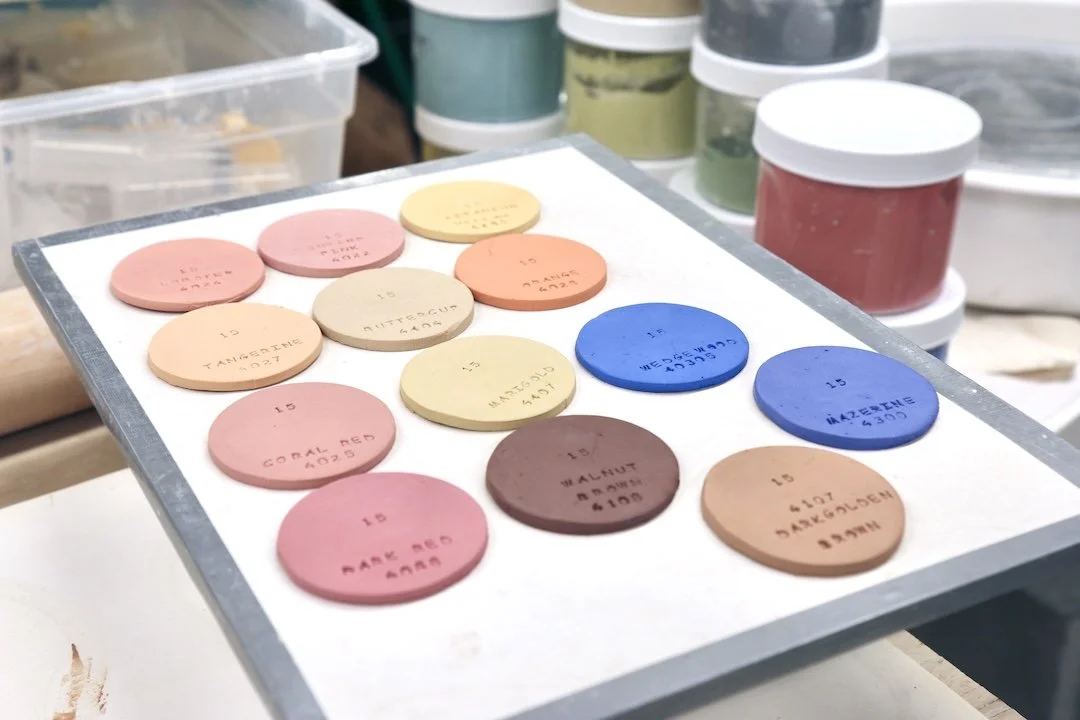
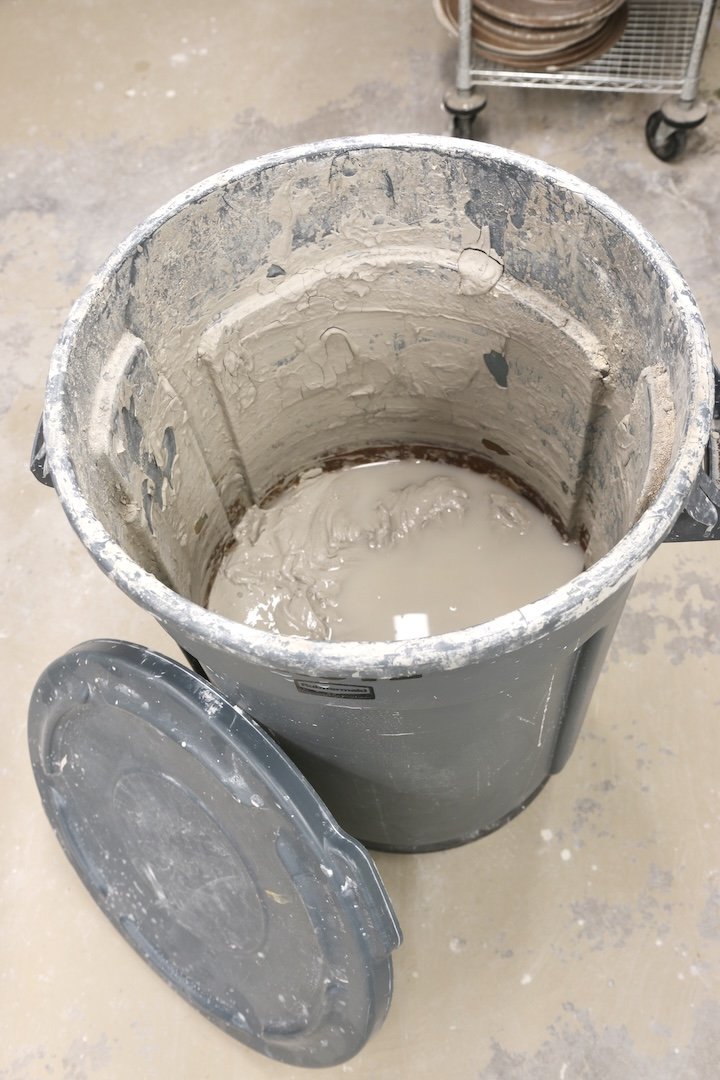
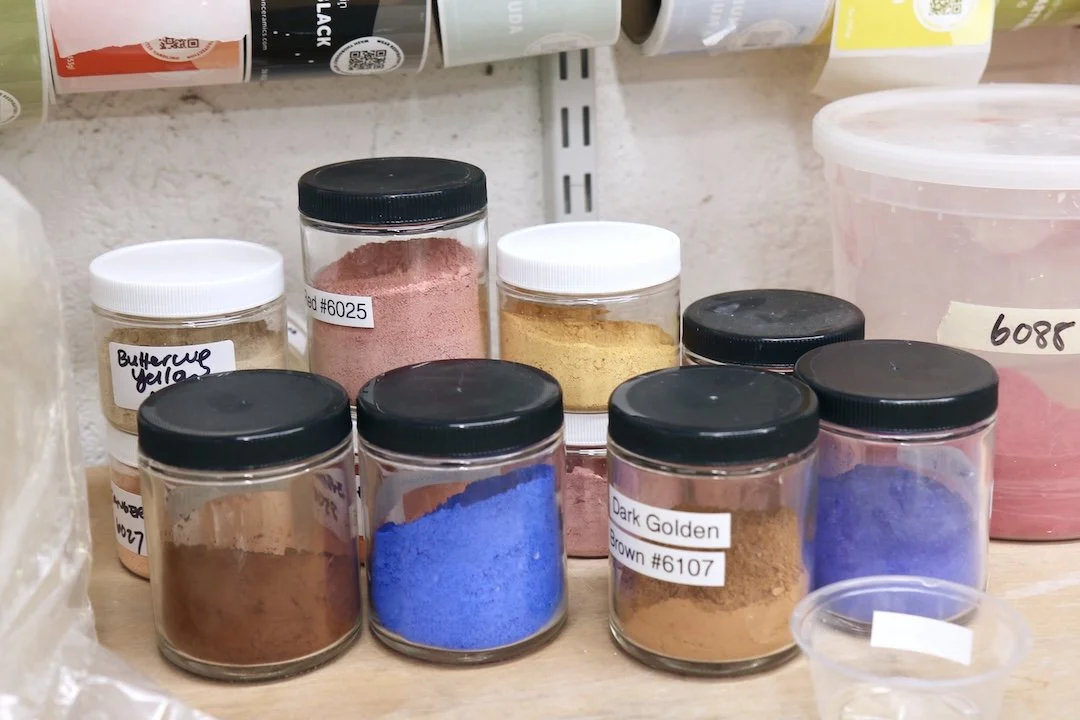
In my studio, I mix a GIANT batch of liquid slip/clay in a 30-gallon trash can on wheels. She’s not pretty ;-) and I do have to blend it up well after it has sat for some time.
However, his amount of slip will last me 6 months! That means I only have to handle large amount of dry materials twice per year.
Why I Work This Way
Less time with dry materials. I want to handle dry materials a little as possible. When clay materials are wet, there is no dust, making for a safer work environment.
Massive time savings. Instead of mixing small batches over and over, I mix one large batch, pull what I need and add colored stain. This makes mixing lots of colors (60+) much more efficient, not overwhelming.
Repeatable results every single time. Because everything is measured and calculated, I can create the same color months or years later. I can also easily scale the amount of colored slip I make up or down. And finally, color and color relationships are extremely important to my work. I want to know the exact color I am mixing so I can design confidently. A color that is just a few shades off could completely ruin the success of a piece.
How I Mix Consistent, Repeatable Colors from Liquid Slip
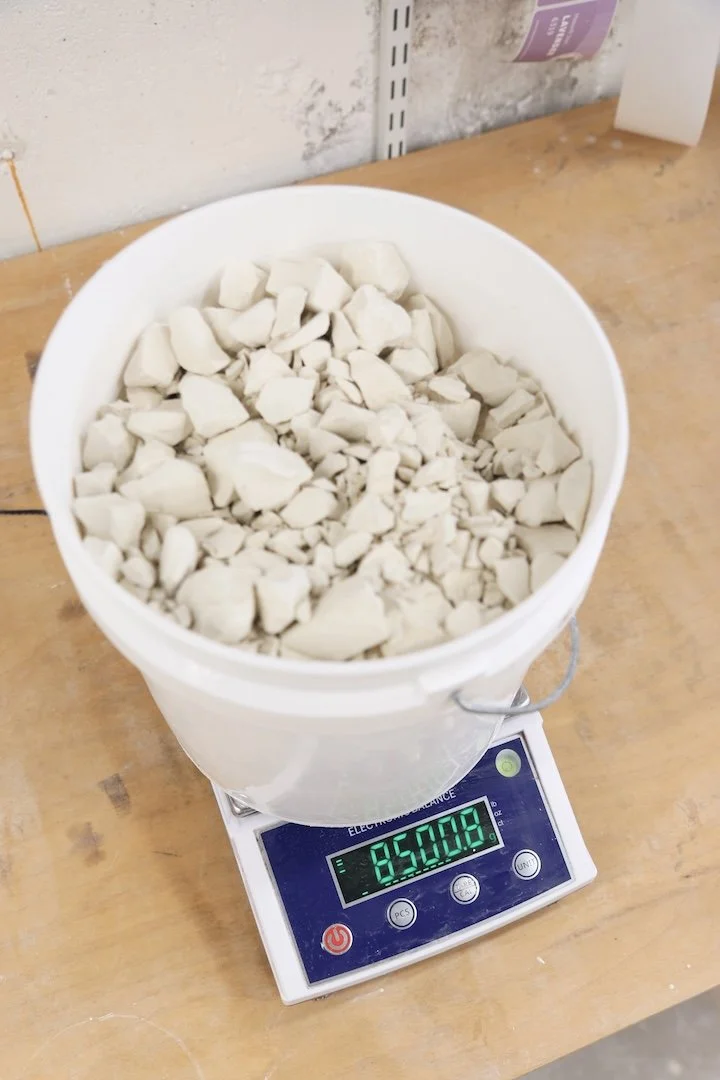
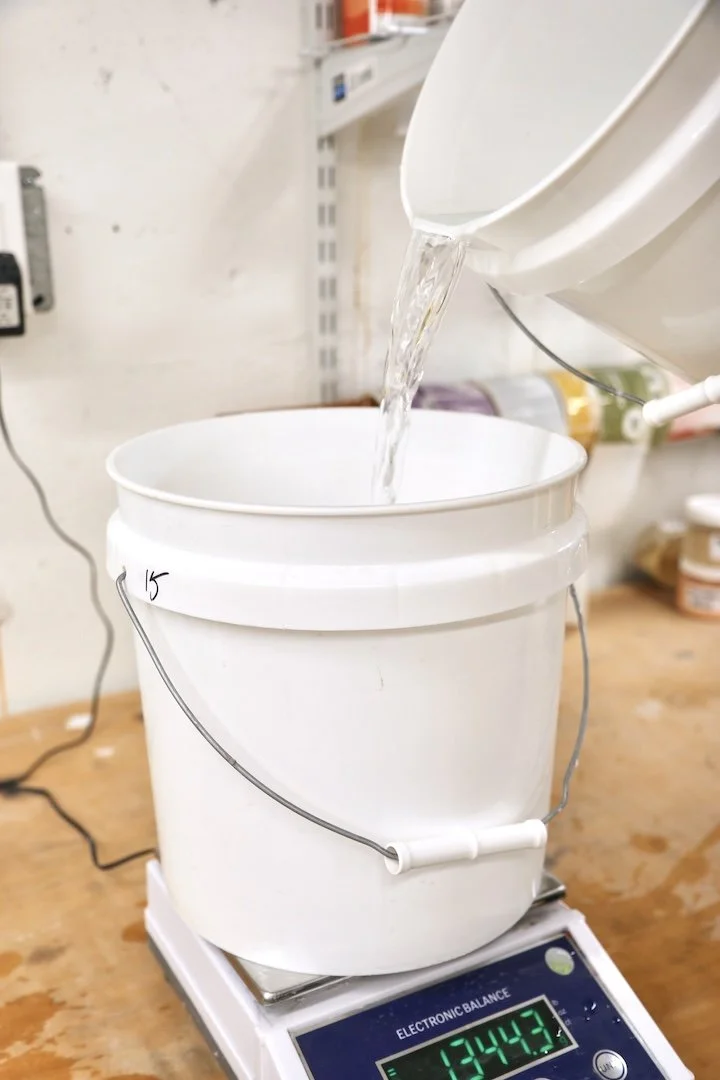
Getting repeatable colors requires me to know exactly how much dry material I mix with water to create my slip base.
For this post, I mixed a (not full) 5 gallon bucket of slip. I measured and recorded everything. I weighed out:
8500g of dry material
3,643g of water
21.25g of darvan
From this information, I can calculate the percentage of dry material in my slip. The tiny addition of Darvan (.25%) is so inconsequential that I don’t include it in the calculation.
8,500g dry + 3643g water = 12,143g of total slip
8,500g dry ÷ 12,143 = .699 or 69.9% (70%)
Now I know that any amount of slip I pull from my 5-gallon buckets contains 70% dry material.
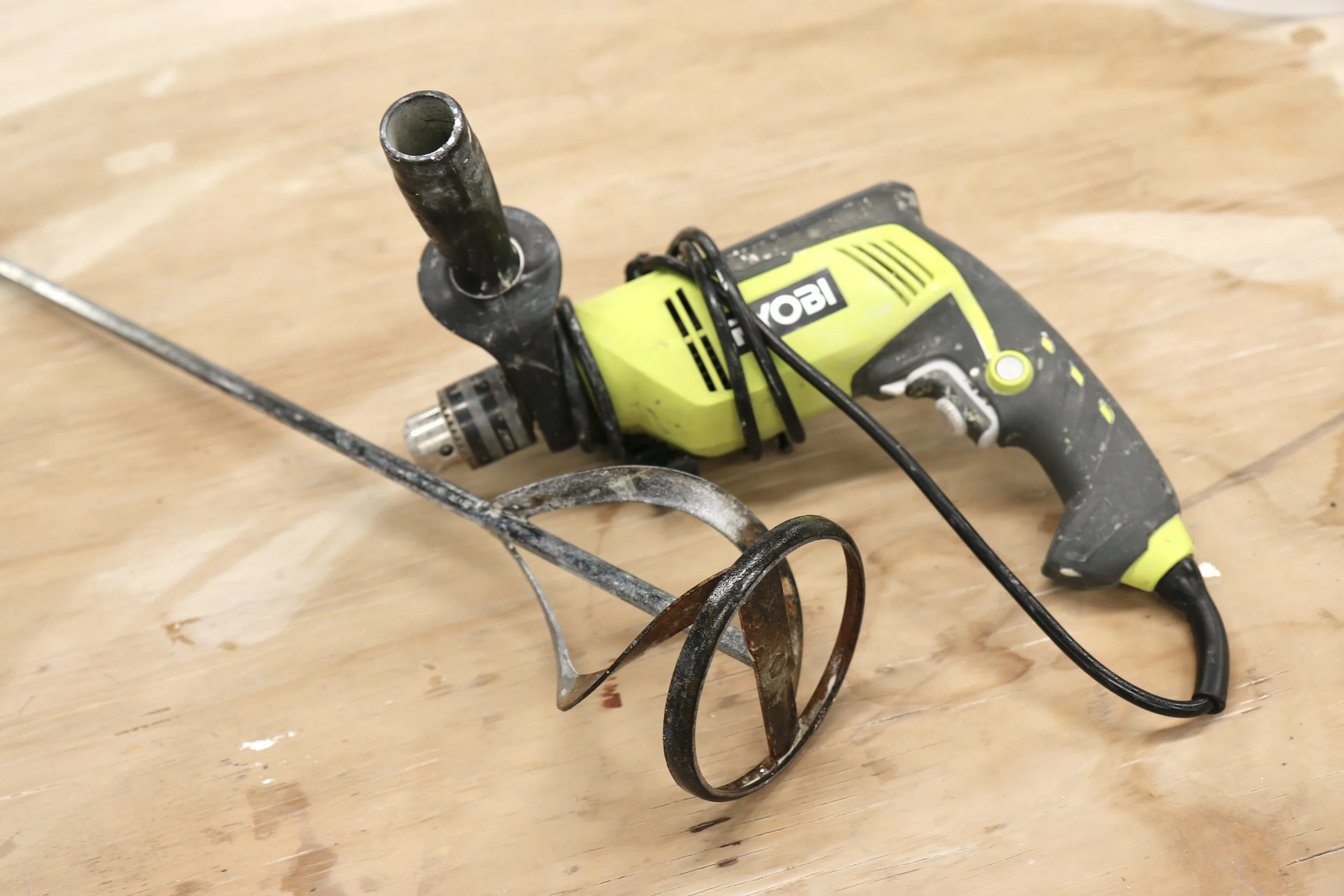
I use a paddle and plug in electric drill to mix large batches.
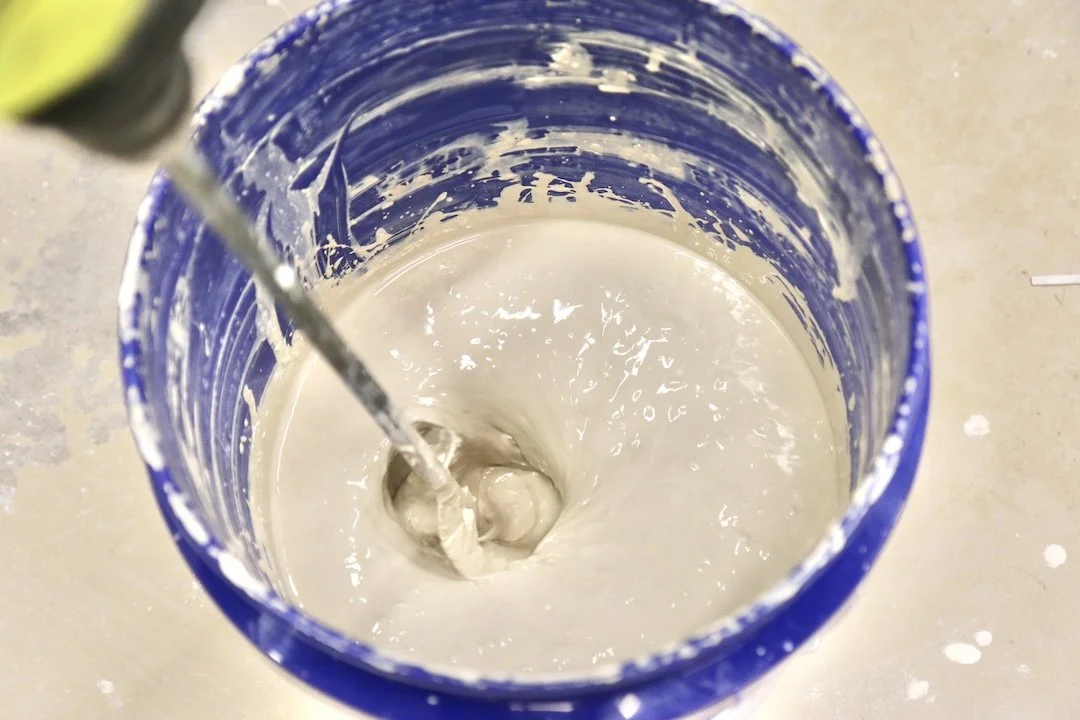
I mix my water and dry ingredients until smooth. If its not smooth, keep mixing.
A Note on Darvan
“Darvan is a deflocculant used to disperse ceramic suspensions to minimize their water content.” In layman’s terms, it helps the slip behave more watery without adding more water.
You do not need to add Darvan. Darvan allows the mixture to blend easily without adding more water. If you don’t have access to Darvan or you don’t have a specific reason to be adding it, you simply need to add more water to your recipe. In this example I am using 30% water, but you will likely need to bump up the water content to 40%-50% without a deflocculant.
How I Calculate How Much Stain to Add
As a general rule of thumb, my colors are mixed as follows:
Pastels: 1% & 3% Stain
Middle Hues: 6% & 9% Stain
Saturated Color: 15% Stain
The percentage of stain is based on the amount of dry material in your slip. The water content of your slip will not affect the final fired color.
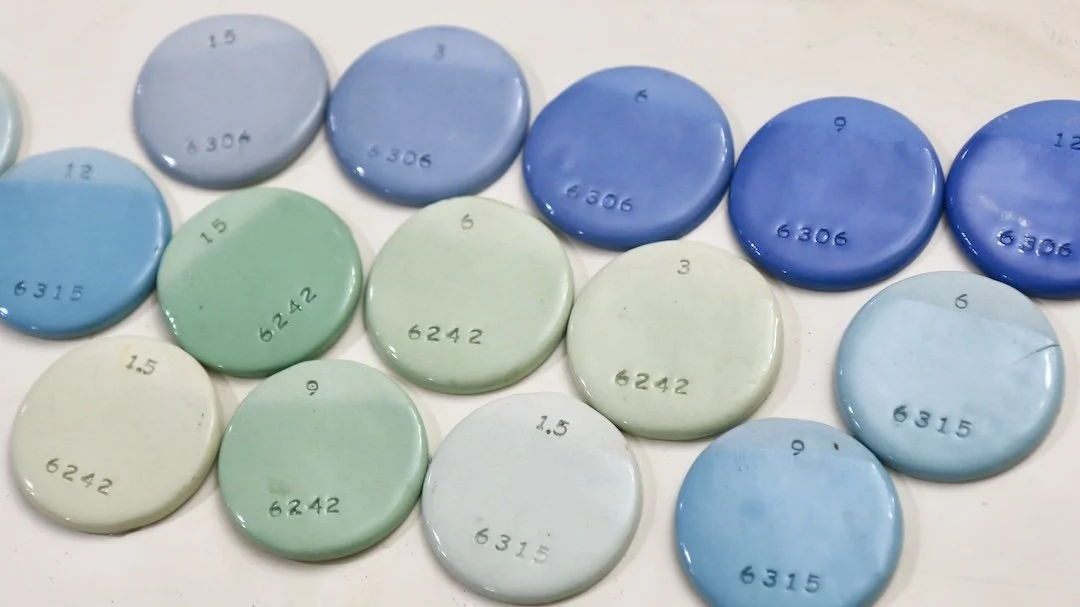
Example 1: A 600g Batch of 6% Sea Green Slip
If I pull 6,000 grams of slip, I know 70% of that is dry material.
600 g × 0.70 = 420 g dry material
I need to find 6% of 420 g to determine how much Sea Green stain I should add.
420 g × 0.06 = 25.2 g of Sea Green Stain
In a 600g batch of slip, I need to add 25 g of Sea Green Stain for a 6% Green.
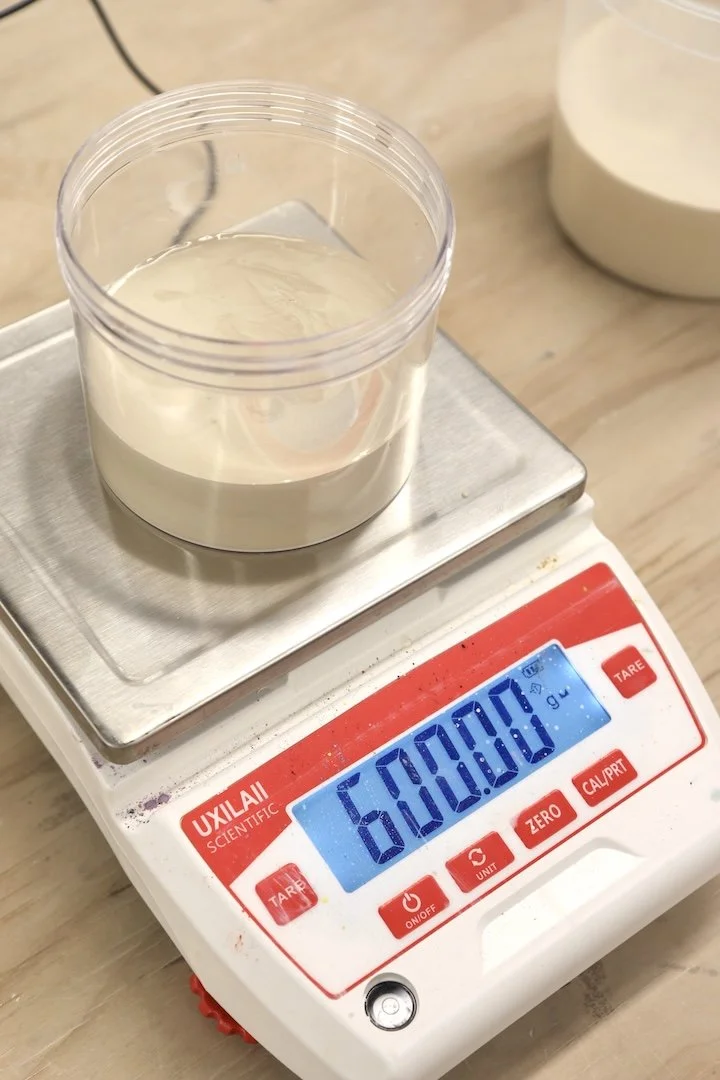
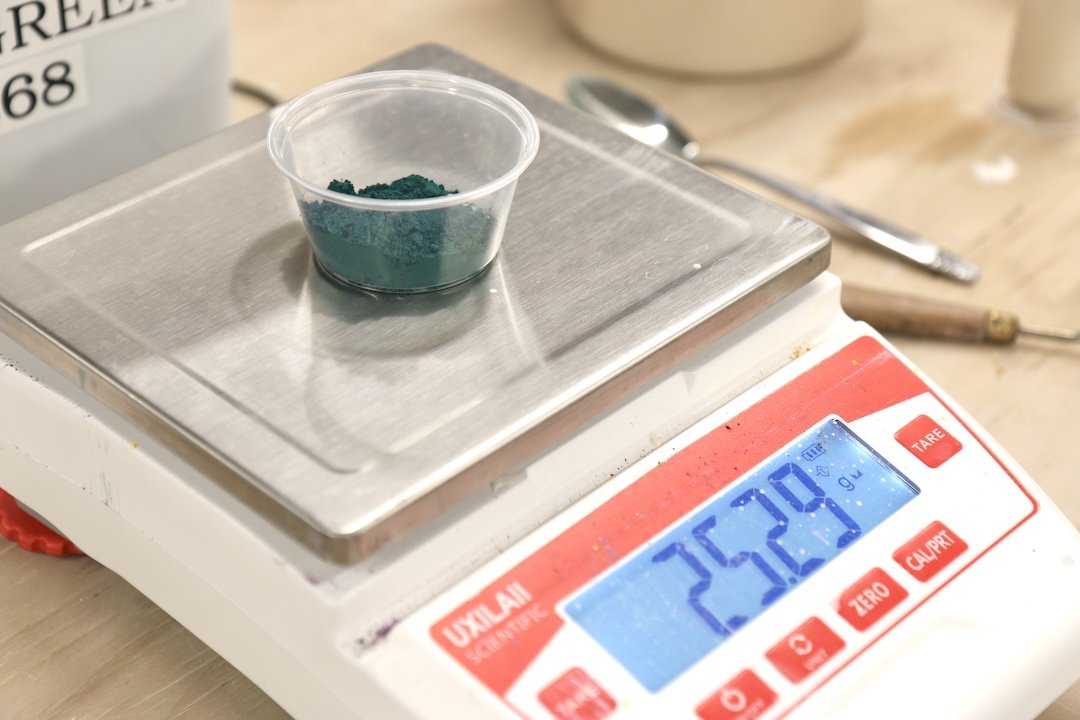

Example 2: A Larger Batch of 6% Sea Green Slip
Let’s say I pull 10 pounds of slip. First, convert pounds to grams:
10 lb ≈ 4,530 grams
Now I calculate the dry material:
4,530 g × 0.70 = 3,171 g dry material
I need to find 6% of 3,171 g to determine how much Sea Green stain I should add.
3,171 g × 0.06 = 190 g of Sea Green Stain
In a 10lb or 4530 g batch of slip, I need to add 190 g of Sea Green Stain for a 6% Green.
If the Math Feels Difficult: Use My Calculators
This calculator will help you determine how much water to add to your slip. Say you want to experiment with a a slip with either 35%, 40% or 45% water content, this calculator will tell you how much water you need to add.
Slip Water Content Calculator
This calculator will help you determine the percent of dry material that is in your base slip.
Dry Material Percentage Calculator
This calculator will help you determine how much stain you need to add to your batch to mix your desired color.
Slip to Stain Calculator
Algebra as a Tool
I absolutely LOVE working this way. A little bit of algebra upfront means safer studio habits, faster workflows and consistent results. Once the system is in place, it feels effortless.
If math has ever felt like a barrier for you, I hope this shows that it doesn’t have to be. A calculator, a notebook, and a few percentages can completely change how you work.
When I teach workshops, I do find it tricky to teach the numbers. Some people get it right off the bat and it just makes sense. Others have a puzzled look on their face. Really, I think it just takes some time to ‘sit’ and study the numbers for it to click. Initially, it might seem complicated with lots of numbers, but ultimately, it’s just percentages, and once you understand the logic, it’s incredibly freeing.